Why the Bench Press Is Giving You Tennis Elbow
Why the Bench Press Is Giving You Tennis Elbow — And How to Fix It
By Dr. Rehan Tahir, PhD, CSCS, TSAC-F, NASM-CES | Apex Tactical Athletics
The most popular lift in the gym has a hidden cost
Walk into any gym on a Monday and you’ll find a line at the bench. It’s the lift everyone measures themselves by — the strength benchmark, the bragging right, the chest-day centerpiece. And for athletes who push for a living, like football linemen driving opponents off the line, a strong press has real carryover.
But here’s what most lifters never connect: a growing ache on the outside of the elbow — the one that flares on every pressing rep — often traces back not to the elbow or the shoulder, but to the wrist. The bench press, done with the wrong wrist position and too little recovery, is a quiet driver of lateral epicondylitis, better known as tennis elbow.
I ran a full biomechanical case study on exactly this. Here’s what the analysis showed, and what to do about it.
The case: a lineman benched into elbow pain
The subject — call him Bobby — was a high school defensive lineman on an off-season strength and hypertrophy block. His program leaned heavily on the bench press, up to three times per week, with rotating intensity and volume. The goal was more force off the line.
By week three, Bobby was reporting pain on both the lateral and medial sides of his elbow during any pressing motion, worst of all on the bench. His athletic trainer and physician diagnosed a mild-to-moderate case of lateral epicondylitis. The program stalled.
So I broke his bench press down frame by frame to find the mechanical fault.
What the movement analysis revealed
Lateral epicondylitis affects up to 3% of the general population and is classically driven by excessive, repetitive wrist extension (Bhargava, Eapen, & Kumar, 2010). When I analyzed Bobby’s bench, the smoking gun showed up at the bottom of the rep: his wrist was cocked back into roughly 63 degrees of extension under the full load of the bar — well past the 35-degree threshold that the research flags as problematic.
Three findings from the literature stack up to explain why that position hurts:
1. Grip strength collapses in deep wrist extension. Bhargava and colleagues (2010) found that in people with tennis elbow, grip strength was actually greater at 15 degrees of wrist extension than at 35 degrees — even though participants believed they were stronger in the more extended position. The deeper the wrist bends back, the less effectively the muscles produce force, and the more strain lands on the tendon.
2. Fatigue spikes the load on the elbow. Huang and colleagues (2014) showed that peak medial-lateral force on the elbow joint increased under fatigued conditions during bench-press training. Three heavy sessions a week without adequate recovery is a recipe for exactly that fatigue.
3. The pronated bench grip is the worst-case wrist position. Yoshii and colleagues (2015) measured wrist extension torque across forearm positions and found it peaked in pronation — which is precisely the forearm position you take to grip a barbell for the bench press.
Put together: a pronated grip, an over-extended wrist, and accumulating fatigue from too-frequent training. The elbow was the victim; the wrist was the culprit.
The deeper mechanism: a muscle imbalance
Digging into muscle activity, the pattern fit a classic upper-body dysfunction — overactive wrist extensors and underactive wrist flexors.
Heales, Vicenzino, MacDonald, and Hodges (2016) found that in people with lateral epicondylitis, the extensor digitorum communis and flexor digitorum profundus picked up a disproportionate share of grip work, while the extensor carpi radialis brevis under-contributed. Their interpretation: when the extensors can’t distribute the load properly to counteract finger flexion during gripping, the extensor tendon absorbs the extra stress. That’s the tissue that breaks down in tennis elbow.
It’s worth noting how unforgiving the bench can be on the wrist when position fails entirely: there are documented cases of a scaphoid (wrist bone) fracture occurring mid-rep when the bar slips and forces the wrist into flexion and radial deviation (Journal of Orthopaedic & Sports Physical Therapy, 2015). Wrist position under a loaded bar is not a detail — it’s a safety issue.
The fix: a four-part corrective approach
The goal isn’t to abandon the bench. It’s to fix the wrist mechanics, rebalance the forearm, and let the tissue recover.
1. Stack the wrist. Reduce the extreme extension at the bottom of the press. Keep the wrist more neutral and stacked over the forearm so the load travels through bone, not through an over-stretched tendon.
2. Release the overactive extensors. Using a lacrosse ball, apply pressure to the extensor group on the top of the forearm. Work from proximal to distal — starting near the lateral epicondyle and moving toward the wrist — holding 20–30 seconds on each trigger point.
3. Strengthen both sides of the forearm. Don’t just chase the painful tissue. Train wrist flexors (supinated wrist curls) and extensors (pronated wrist curls), 3 sets of 12 each. Eccentric (lowering-focused) loading is especially well supported for elbow tendinopathy and is worth emphasizing once pain allows. Restoring balance is what offloads the stressed extensor tendon.
4. Fix the dose. Bobby’s real trigger was three heavy bench sessions a week with no recovery. Pull frequency back, build in rest, and rebuild with a linear periodization model. The surgical literature shows the extensor origin can be released to treat stubborn cases (Svernlöv & Adolfsson, 2006) — but the goal here is to make that level of intervention unnecessary by correcting the mechanics early.
The tactical crossover
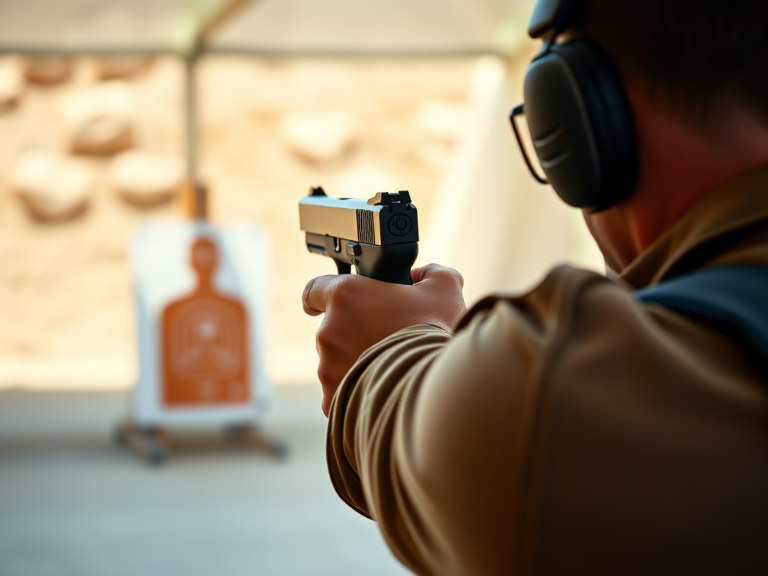
Here’s where this matters beyond the weight room. The exact wrist mechanics that govern a safe, strong bench press also govern recoil control on the firing line. A shooter who can’t stabilize wrist extension under load gets more muzzle flip, slower follow-up shots, and accumulating forearm fatigue over a long range day — the same failure pattern as Bobby’s bench, just under a different load.
Train the wrist and forearm to handle extension under load, and your last magazine starts looking like your first. Strength science and tactical performance aren’t separate skills. They’re the same mechanics applied to different tools.
The bottom line
If pressing is wrecking your elbow, stop blaming the elbow. Check the wrist. Stack it, balance the forearm, respect recovery — and you can keep the most popular lift in the gym without paying for it in pain.
Dr. Rehan Tahir holds a PhD in Health and Human Performance and an MS in Exercise Science, and is a certified strength and conditioning specialist (CSCS), tactical strength and conditioning facilitator (TSAC-F), and corrective exercise specialist (NASM-CES). Through Apex Tactical Athletics, he coaches online fitness clients and provides private firearms instruction. Want your training program built around mechanics that actually hold up under load? Reach out for coaching.
References
Bhargava, A. S., Eapen, C., & Kumar, S. P. (2010). Grip strength measurements at two different wrist extension positions in chronic lateral epicondylitis — comparison of involved vs. uninvolved side in athletes and non-athletes: A case-control study. Sports Medicine, Arthroscopy, Rehabilitation, Therapy & Technology, 2, 22–29.
Biel, A. R. (2014). Trail guide to the body: A hands-on guide to locating muscles, bones and more. Boulder, CO: Books of Discovery.
Heales, L. J., Vicenzino, B., MacDonald, D. A., & Hodges, P. W. (2016). Forearm muscle activity is modified bilaterally in unilateral lateral epicondylalgia: A case-control study. Scandinavian Journal of Medicine & Science in Sports, 26(12), 1382–1390. https://doi.org/10.1111/sms.12584
Huang, Y. P., Chou, Y. L., Chen, F. C., Wang, R. T., Huang, M. J., & Chou, P. P. H. (2014). Elbow joint fatigue and bench-press training. Journal of Athletic Training, 49(3), 317–321.
Svernlöv, B., & Adolfsson, L. (2006). Outcome of release of the lateral extensor muscle origin for epicondylitis. Scandinavian Journal of Plastic & Reconstructive Surgery & Hand Surgery, 40(3), 161–165. https://doi.org/10.1080/02844310500491492
Yoshii, Y., Yuine, H., Kazuki, O., Tung, W., & Ishii, T. (2015). Measurement of wrist flexion and extension torques in different forearm positions. BioMedical Engineering OnLine, 14, 1–10. https://doi.org/10.1186/s12938-015-0110-9
Additional supporting case report (from your AES 6020 library): Fracture of the scaphoid during a bench-press exercise. (2015). Journal of Orthopaedic & Sports Physical Therapy, 45(8). https://www.jospt.org/doi/10.2519/jospt.2015.0408